

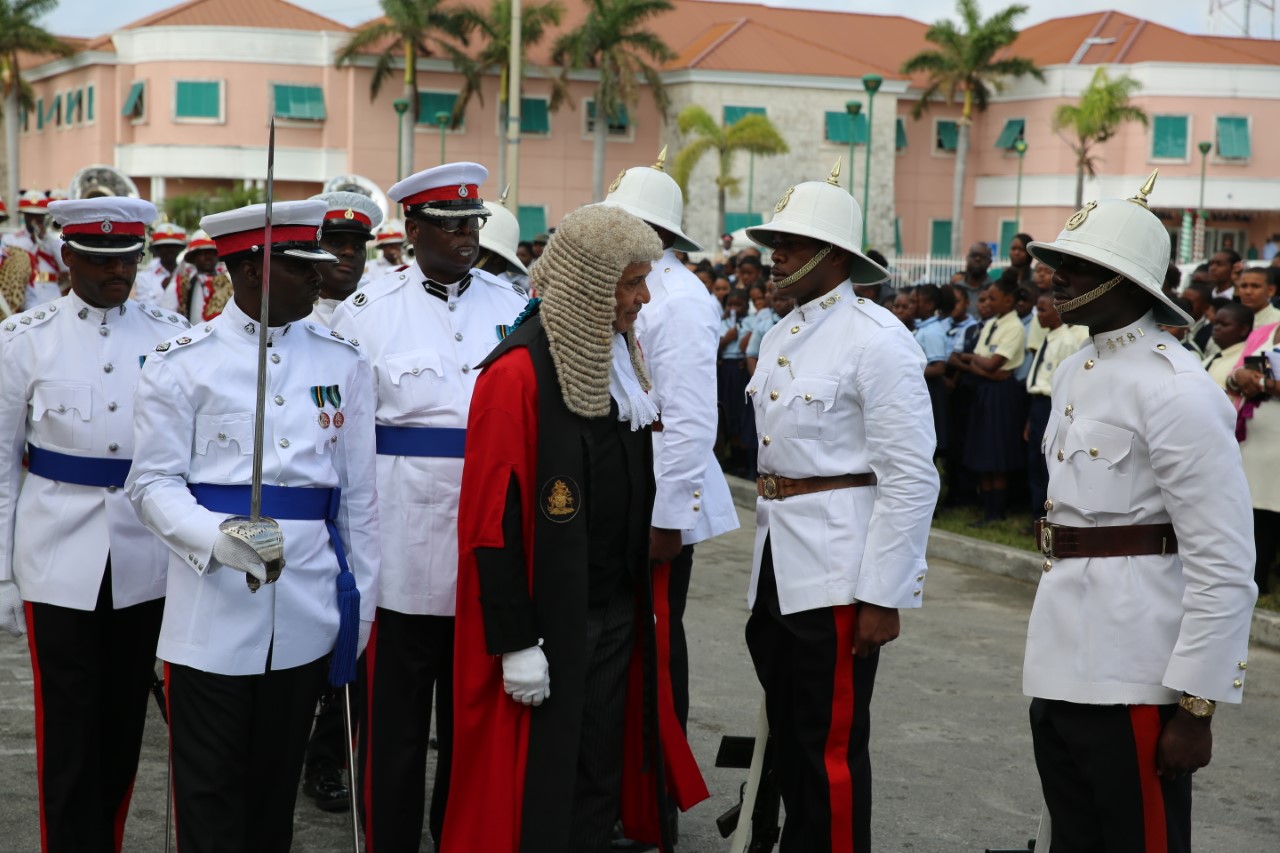


Prime Minister and Minister of Finance, the Hon. Philip Davis, says now is the time for leaders who will stand with the people of Grand Bahama and with the wider Bahamian family, adding that the old order in which private interests claimed the right to sit above Bahamian law is coming to an end.
“We will break that order. We will replace it with one in which Bahamian sovereignty is real in Freeport, in which self-determination is a lived reality for the people who call that island home,” said Prime Minister Davis, during a Communication in the House of Assembly on Wednesday, March 4, 2026.
The Prime Minister sought to bring even more clarification for the Bahamian public regarding the recent ruling of the Arbitration Tribunal concerning the Government of The Bahamas and the Grand Bahama Port Authority. He laid out the implications for the governance and the future of Freeport, as a result of the ruling.
Dispelling some public conclusion that the government lost their fight in the arbitration, the Prime Minister said that the ruling was a gamechanger for the island of Grand Bahama. As a result, according to the Prime Minister, the Port Authority has significant liabilities that are now enforceable because his government acted.
“From the first day my government took office, we were confronted with a status quo in Freeport that was unfair to the people of Grand Bahama and to taxpayers across our islands,” said Mr. Davis.
“For years, the Port Authority maintained that it had no liability to central government and that successive governments had no rightful place in decisions about licensing, immigration, customs, utilities, land purchases, and development approvals in the Port Area.
“My government was not prepared to live with that arrangement. The cost was not abstract. It was borne by working families in Grand Bahama who paid their taxes and received declining services while the revenues of the Port Area flowed into private hands.
“That is a transfer of wealth from the Bahamian public to a private entity, and it had been tolerated for far too long.”
Outlining the key findings from the ruling which he says will matter for the Bahamian people, Prime Minister Davis noted that the Tribunal has confirmed that the Grand Bahama Port Authority has an ongoing contractual obligation to make annual payments to the Government, for the benefit of the Bahamian taxpayer, for the remainder of the Hawksbill Creek Agreement, until 2054.
Secondly, Mr. Davis noted that the Tribunal made it clear that questions about what is owed for earlier years are unresolved and alive and that it is able and prepared to determine those sums once the parties put the issue before it.
“My government will do exactly that. The effect of the award is that liability has been established. What remains is the assessment of that liability.”
Third, Prime Minister Davis pointed out that the Tribunal rejected the Port Authority’s effort to carve Freeport out from the ordinary reach of Bahamian law.
“GBPA sought sweeping declarations that it alone controlled licensing of businesses, immigration, customs, utilities, land purchases, and environmental approvals in the Port Area,” said Prime Minister Davis.
“It tied those declarations to a damages claim of up to one billion dollars in taxpayer money, money that would otherwise support schools, hospitals, security, and hurricane recovery.
“The Tribunal rejected the Port Authority’s claims. On business licensing, rejected. On immigration, rejected. On customs, rejected. On utilities, rejected. On foreign land purchases, rejected. On environmental approvals, rejected. On the alleged diversion of investment by the Government from the port area, rejected. Seven substantial counterclaims and seven rejections.”
The Prime Minister admitted that the Tribunal did not grant the specific sum of 357 million dollars under the original clause of the Hawksbill Creek Agreement relied on, which the government was seeking in their action against the GBPA.
Instead, the Tribunal found that a 1994 agreement, entered into by a previous FNM administration, when it extended the concessions under the Hawksbill Creek Agreement, replaced that clause with a revised payment mechanism.
“Under that revised mechanism, GBPA is required to pay an annual sum to the government, and that sum is subject to a contractual review,” said Mr. Davis. “The Tribunal held that this review mechanism remains operative and enforceable.
“It described it as self-evident that the government can invoke this review for future years and confirmed that it remains fully enforceable. The initial ruling was a victory for us, because it established liability for them. They have to pay up.
“Next, we move to a new phase of arbitration, where we determine how much.”
The Prime Minister said history will record that when many said do nothing, Parliament supported a government that chose to act.


